Introduction to Gujarati Thali
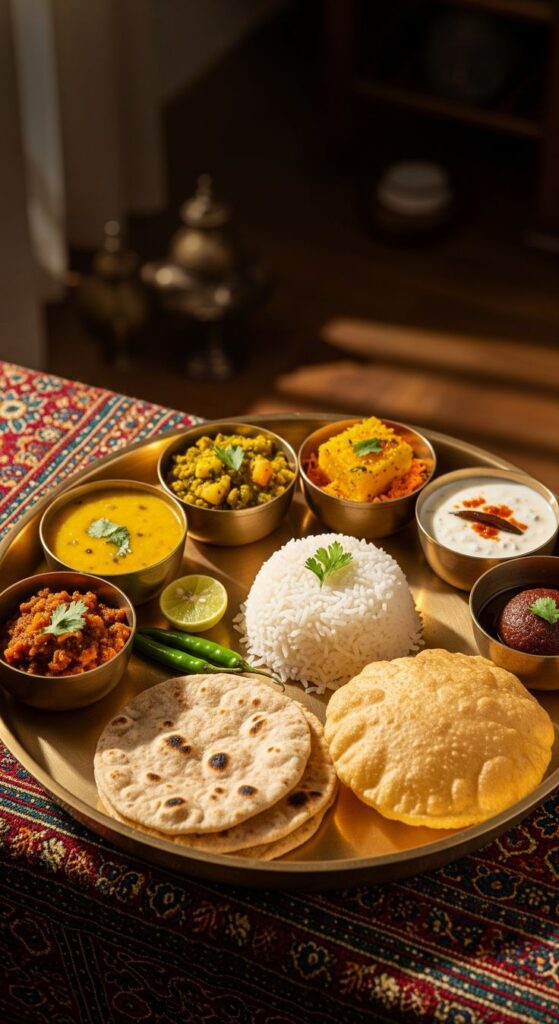
The Gujarati Thali is one of the most celebrated culinary traditions in India. It is more than just a meal—it is a colorful, flavorful, and wholesome experience that reflects the rich culture, heritage, and diversity of Gujarat. Known for its perfect balance of sweet, salty, and spicy flavors, a traditional Gujarati thali is a feast for both the eyes and the taste buds.
From roadside eateries in Ahmedabad to royal restaurants in Vadodara, the Gujarati thali has become synonymous with hospitality and cultural pride. It is a symbol of Gujarat’s agricultural abundance and the ingenuity of its people in creating a wide variety of dishes from locally available ingredients.
History of Gujarati Thali
The history of the Gujarati Thali is closely linked with Gujarat’s geography, culture, and economy. Gujarat is a land of fertile plains, coastal regions, and arid zones, which influenced the ingredients and cooking methods of its people. Historically, Gujarati cuisine developed under the influence of agriculture, trade, Jainism, and vegetarianism.
- Agricultural influence: Gujarat produces a variety of grains, lentils, and vegetables, which became staples in the Gujarati diet.
- Vegetarianism: Jainism and Vaishnav traditions encouraged vegetarian cooking, which is why most Gujarati dishes are vegetarian.
- Trade influence: Gujarat’s coastal trade brought spices, dry fruits, and exotic flavors into local cuisine.
Over centuries, these influences came together to form a thali, a complete platter representing Gujarat’s culinary identity, with a perfect mix of taste, texture, and nutrition.
What is a Traditional Gujarati Thali?
A Gujarati Thali is a complete meal served on a large platter with several small bowls (katoris), each containing a different dish. The thali is designed to balance flavors—sweet, sour, salty, bitter, and spicy—while providing a variety of nutrients.
Popular Dishes in a Gujarati Thali
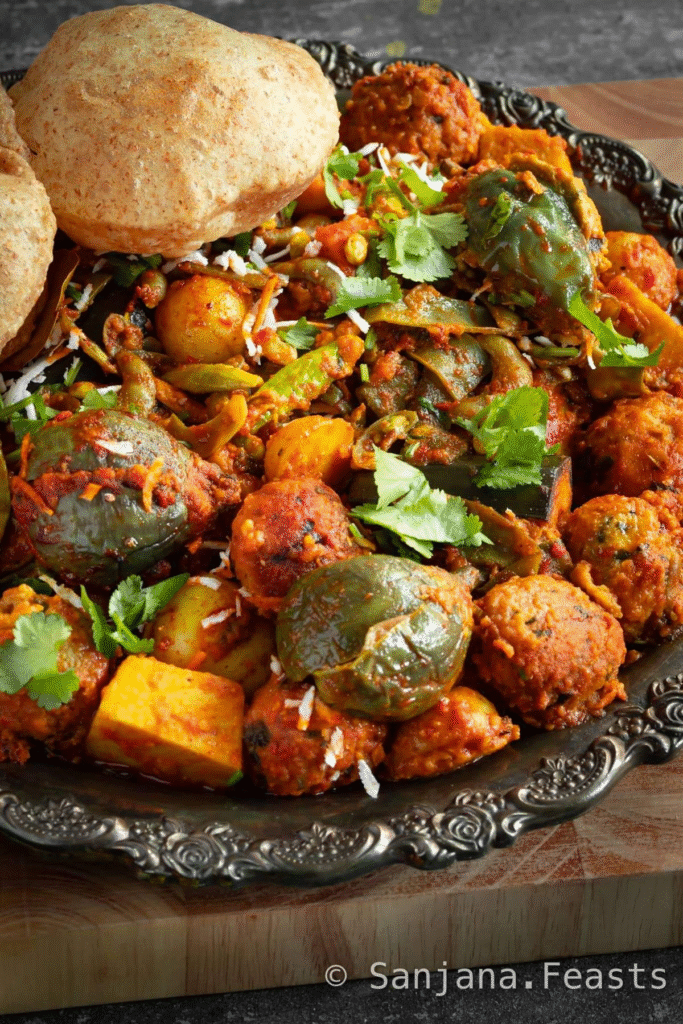
1. Undhiyu
Undhiyu is a mixed vegetable delicacy made with seasonal vegetables and spices. Traditionally, it is cooked upside down underground in clay pots, giving it a unique flavor.
Ingredients:
- Surti papdi (flat beans), yam, eggplant, green peas, methi leaves
- Grated coconut, ginger-garlic paste, spices
- Oil or ghee
Method:
- Chop vegetables and mix with spices.
- Layer vegetables in a heavy-bottomed pot.
- Cover and cook on low heat until tender.
- Serve hot with puri or roti.
2. Dal Dhokli
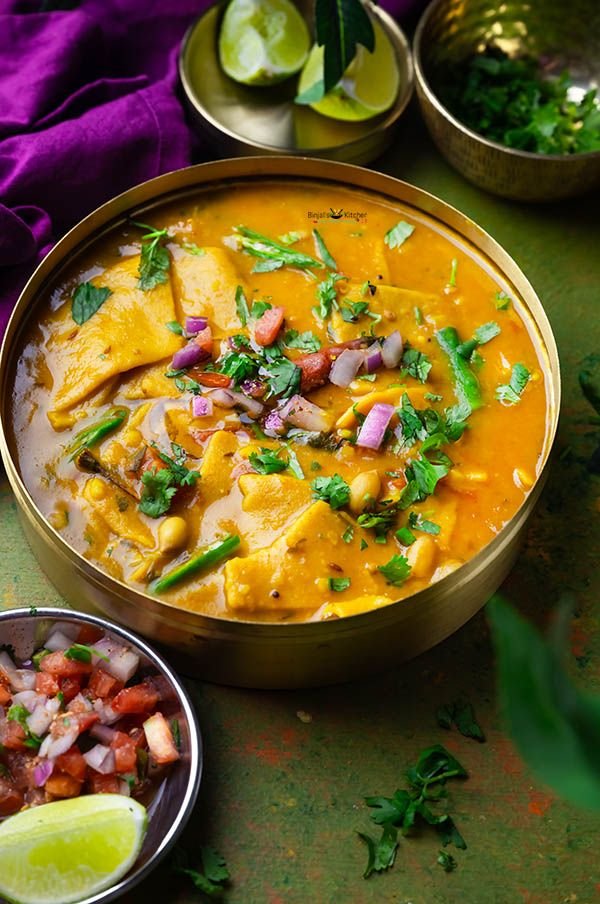
A comfort food favorite, dal dhokli is whole wheat dumplings cooked in a spiced lentil soup. It is wholesome, nutritious, and easy to digest.
Ingredients:
- Toor dal (pigeon peas), wheat flour, turmeric, cumin seeds, hing
- Garlic, ginger, green chilies
Method:
- Make a soft dough from wheat flour and roll into flat pieces.
- Boil dal with spices.
- Add dhokli pieces into the simmering dal.
- Cook until dhokli absorbs flavors. Serve hot.
3. Khandvi
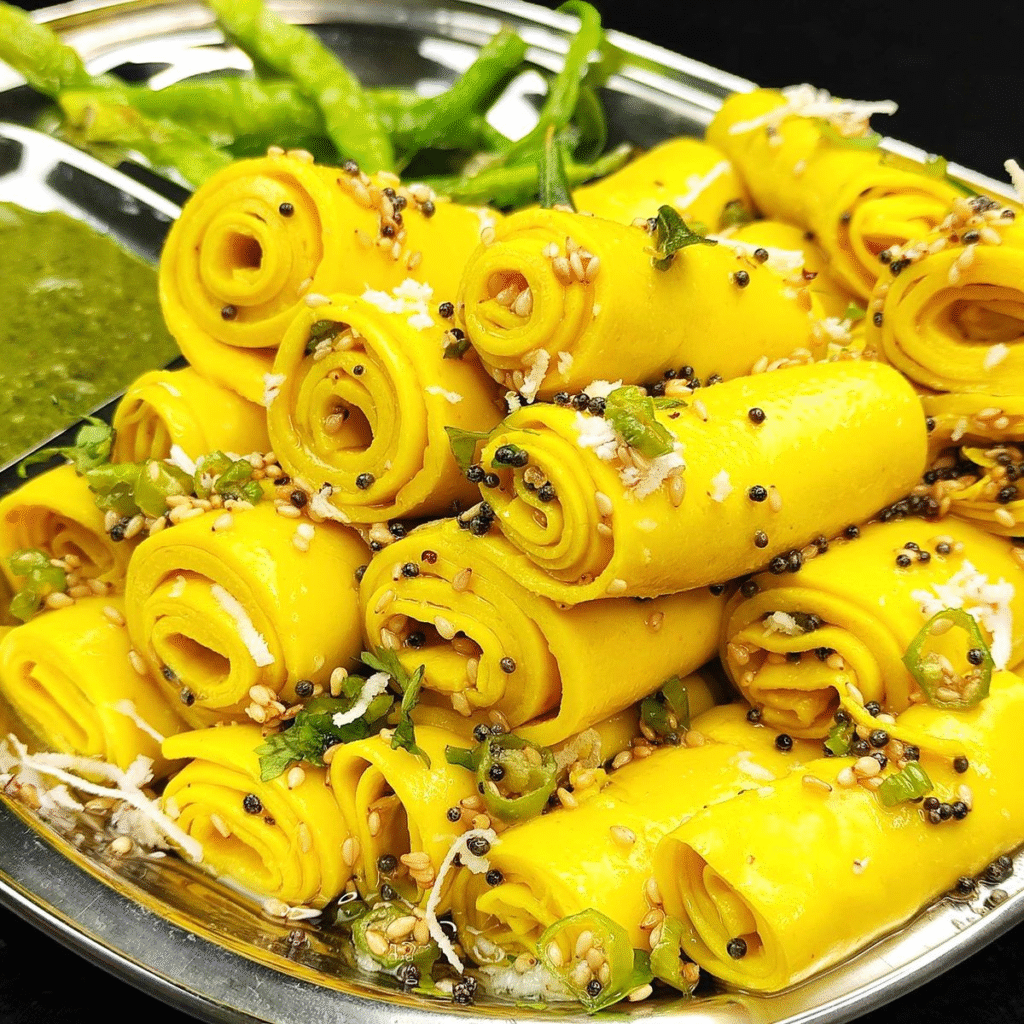
Khandvi is a savory snack made from gram flour and yogurt, rolled into thin layers and garnished with mustard seeds and coconut.
Ingredients:
- Gram flour, yogurt, turmeric, salt, water
- Mustard seeds, sesame seeds, grated coconut
Method:
- Mix gram flour and yogurt into a smooth batter.
- Cook on low heat until thickened.
- Spread thinly on a flat surface, cut, and roll.
- Garnish with seeds and coconut.
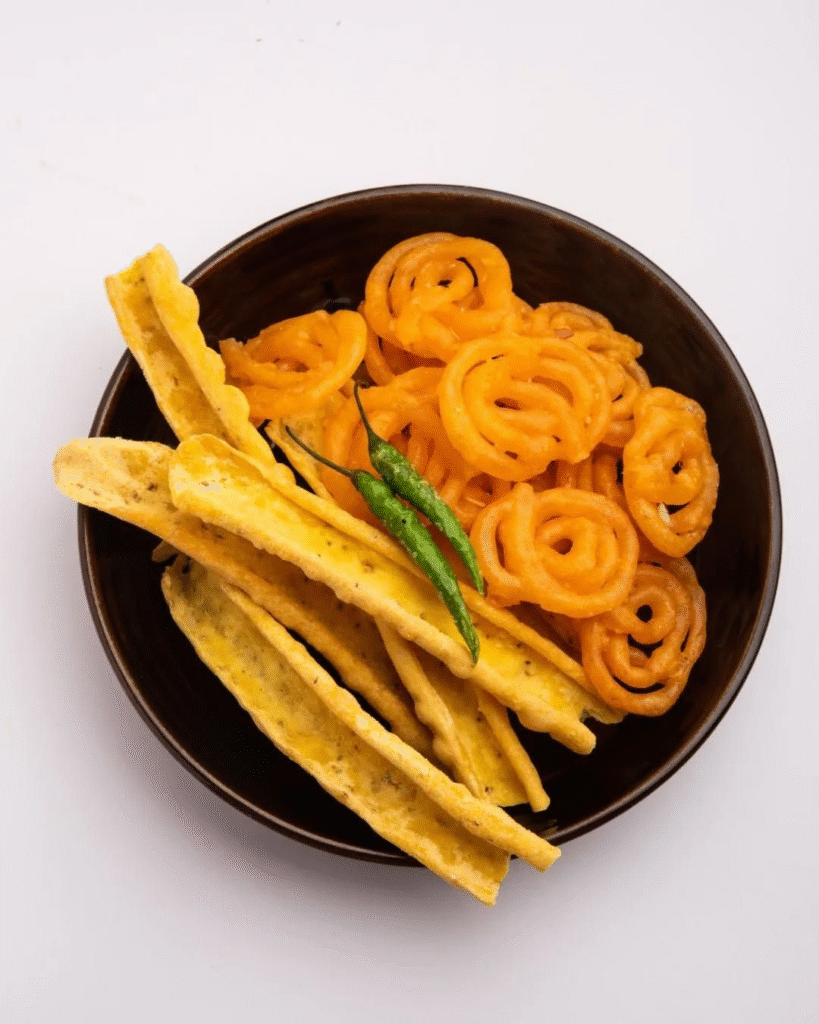
4. Fafda and Jalebi
A classic breakfast combo in Gujarat. Fafda is a crispy gram flour snack, served with tangy chutney, while jalebi adds the sweet touch.
Ingredients
Fafda
- Besan (gram flour) – 1 cup
- Ajwain (carom seeds) – ½ tsp
- Turmeric – a pinch
- Baking soda – a pinch
- Oil – 2 tbsp
- Water – as needed (very little)
- Salt – to taste
- Papad khar / baking soda (optional but traditional)
- Oil – for deep frying
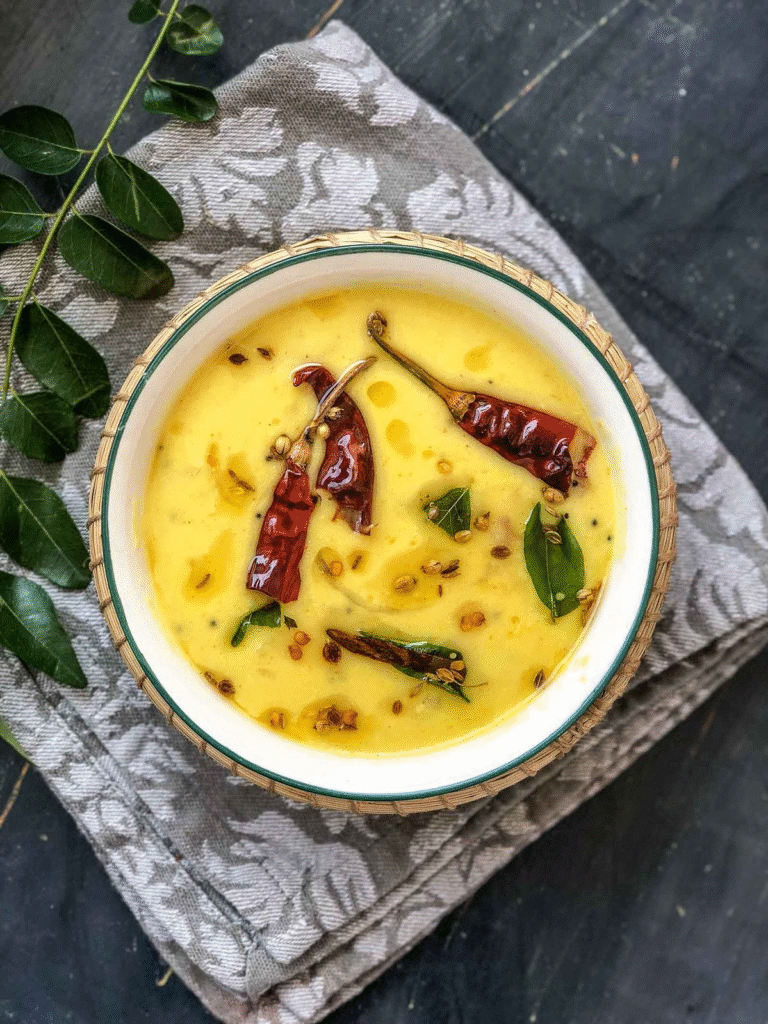
5. Kadhi
Gujarati kadhi is a yogurt-based curry flavored with ginger, green chilies, and curry leaves, slightly sweetened with jaggery.
Ingredients:
- Yogurt, gram flour, ginger, green chilies, curry leaves, jaggery
- Turmeric, salt, cumin seeds
Method:
- Whisk yogurt and gram flour.
- Boil with water, turmeric, and salt.
- Add tempering of cumin seeds, curry leaves, ginger, and green chilies.
- Simmer and add jaggery for sweetness.
6. Rotis and Rice
- Rotis: Bajra, jowar, or wheat chapati
- Rice: Plain steamed rice, khichdi, or pulao
7. Sweet Treats
Gujarati thali desserts include shrikhand, mohanthal, and basundi—made with condensed milk, ghee, and nuts, representing the rich culinary heritage.
The Gujarati Thali is more than just food—it reflects Gujarat’s hospitality, family traditions, and festive spirit. Guests are served with a wide variety of dishes, showcasing both generosity and culinary skill.
During festivals like Uttarayan, Navratri, and Diwali, thalis are prepared with extra care, including special farsan and sweets. The thali is also an educational experience, introducing diners to diverse textures, flavors, and cooking methods.
Table of Contents
Health Benefits of Gujarati Cuisine
- Vegetable-rich: Offers fiber, vitamins, and minerals
- Protein from lentils: Healthy for vegetarians
- Balanced flavors: Sweet, salty, and sour balance digestive health
- Spices: Aid metabolism and immunity
Gujarati cuisine is a perfect example of tasty yet wholesome vegetarian food.
Conclusion
The Gujarati Thali is a culinary journey that combines history, culture, and flavor into a single platter. From undhiyu to dal dhokli, kadhi to shrikhand, every dish tells a story of Gujarat’s agricultural richness, religious traditions, and royal hospitality.
Whether you are exploring India, cooking at home, or sharing your love of food online, the Gujarati Thali is an unforgettable experience of taste, tradition, and wellness.